How do you care for alpaca? Gently, and far less often than you might think: wash it by hand in cold water, dry it flat away from the sun and fold it rather than hang it. Treated this way, a beautiful alpaca knit softens with every winter and stays with you for years.
There is something about alpaca. It is lighter than it looks, warmer than it has any right to be and soft enough to wear against bare skin, with a gentle halo that catches the light. It is also one of the most rewarding fibres to own, because it asks for so little. Here are the seven secrets to keeping it beautiful, from the first wash to the day you fold it away for summer.


Secret one
How to Wash Alpaca
How do you wash an alpaca sweater? By hand, in cold water, with a gentle wool or cashmere wash. Fill a basin with cool water, swirl in a little wash, then lower the knit in and let it soak for ten minutes before rinsing it in clean water of the same temperature.
The ritual: Press the water through the fibres with your palms rather than rubbing, then lift the knit out in one piece so its own weight does not stretch it. Never wring or twist alpaca. Lay it on a thick towel, roll the towel up like a scroll and press gently to draw out the water.
The details: How often should you wash alpaca? Rarely. Alpaca is naturally resistant to odour, so a night of fresh air between wears is often all it needs. Wash it a few times a season, or when it has truly earned it.


Secret two
Can Alpaca Go in the Washing Machine or Dryer?
Can you put alpaca in the washing machine? We always recommend washing alpaca by hand, because heat, friction and a fast spin are what change a knit forever. If your machine has a true hand wash or wool cycle, use it only with cold water, a gentle wash and the lowest spin, with the knit turned inside out in a mesh bag.
The ritual: Can you put alpaca in the dryer? Never. The heat and tumbling of a dryer will shrink and felt the fibres, and there is no way back from it. Patience and a flat surface are all alpaca needs.
The details: Does alpaca shrink? Only when it meets heat or agitation. Cold water, a gentle hand and air drying keep the knit exactly the size it was the day you fell in love with it.


Secret three
How to Dry Alpaca So It Keeps Its Shape
How do you dry alpaca? Flat, on a towel or a mesh rack, away from direct sun and heat. Ease the knit back into its natural shape while it is still damp, smoothing the shoulders, the cuffs and the hem, and let it dry slowly in the open air.
The ritual: Turn it once as it dries so both sides breathe. Keep it away from heaters, fireplaces and a sunny windowsill, which can yellow white knits and fade deep colours.
The details: Never hang a wet alpaca knit. Water makes the fibres heavy, and a hanger will stretch the shoulders and the length out of proportion.


Secret four
Does Alpaca Shed? Less Than You Might Think
Does alpaca shed? Some does. Loosely spun, heavily brushed pure alpaca can leave a fine trail of fibres on everything it touches. The E•L•S knits are a brushed alpaca blend, which holds the fibres together far better, so you keep the soft halo without the trail.
The ritual: If you notice a stray fibre or two in the first few wears, that is simply the surface settling. To stop an alpaca jumper shedding, give it a gentle shake before you put it on and run a soft garment brush or lint roller over it afterwards. Some people fold a new knit into a clean bag and leave it in the freezer for a few hours before the first wear. It does no harm, though with a good blend it is rarely needed.
The details: For the first outing, wear it over silk, satin or a crisp cotton shirt rather than under a dark wool coat, and any early strays have nowhere to show.


Secret five
Does Alpaca Pill? How to Keep It Looking New
Does alpaca pill? Less than most fine knits. Alpaca fibres are long and smooth, so they hold together well and pill far less than cashmere, though a little pilling can appear where a knit meets friction, under the arms, at the cuffs and where a bag rests.
The ritual: Lay the knit flat and lift away any pills with a cashmere comb or a fabric shaver, working gently in one direction. Do this every so often and your knit will look as fresh as the day it arrived.
The details: Rotate your knits so each has time to rest, and carry your bag on the other shoulder when you wear alpaca. Less friction means less pilling.


Secret six
How to Store Alpaca Between Seasons
How do you store alpaca? Clean, folded and somewhere cool, dark and dry. Always wash or air a knit before you put it away, because moths are drawn to traces of perfume and skin, then fold it and lay it flat in a drawer or a breathable cotton bag.
The ritual: Tuck a cedar block or a sachet of lavender between the layers. They smell beautiful and keep moths away, and the cedar can be refreshed each season with a light sanding.
The details: Avoid plastic, which traps moisture, and never store alpaca on a hanger, where it will slowly stretch. For more on building a knitwear wardrobe that lasts, read The Knitwear Guide.

Secret seven
Is Alpaca Itchy? Alpaca vs Cashmere vs Merino
Most people who ask whether alpaca is itchy have been let down by wool before. Alpaca feels different. The fibre is smooth and contains no lanolin, the natural grease in sheep's wool that some people find irritating, so it sits softly against bare skin. Brushing adds a light, airy halo, which makes it feel even gentler at the neck and wrists.
The ritual: Alpaca or cashmere? Cashmere is the softer and finer of the two, but it pills easily and asks for more care. Alpaca is stronger, pills less and is warmer for its weight, so it suits the knit you reach for every week of winter.
The details: And merino? Merino is light and springy, made for layering close to the body. Alpaca drapes more fluidly and holds more warmth without the bulk, which is why one alpaca knit often feels as warm as two lighter layers. For how to wear knits through the changing seasons, read How to Layer Clothes Between Seasons.
A Knit for Years to Come
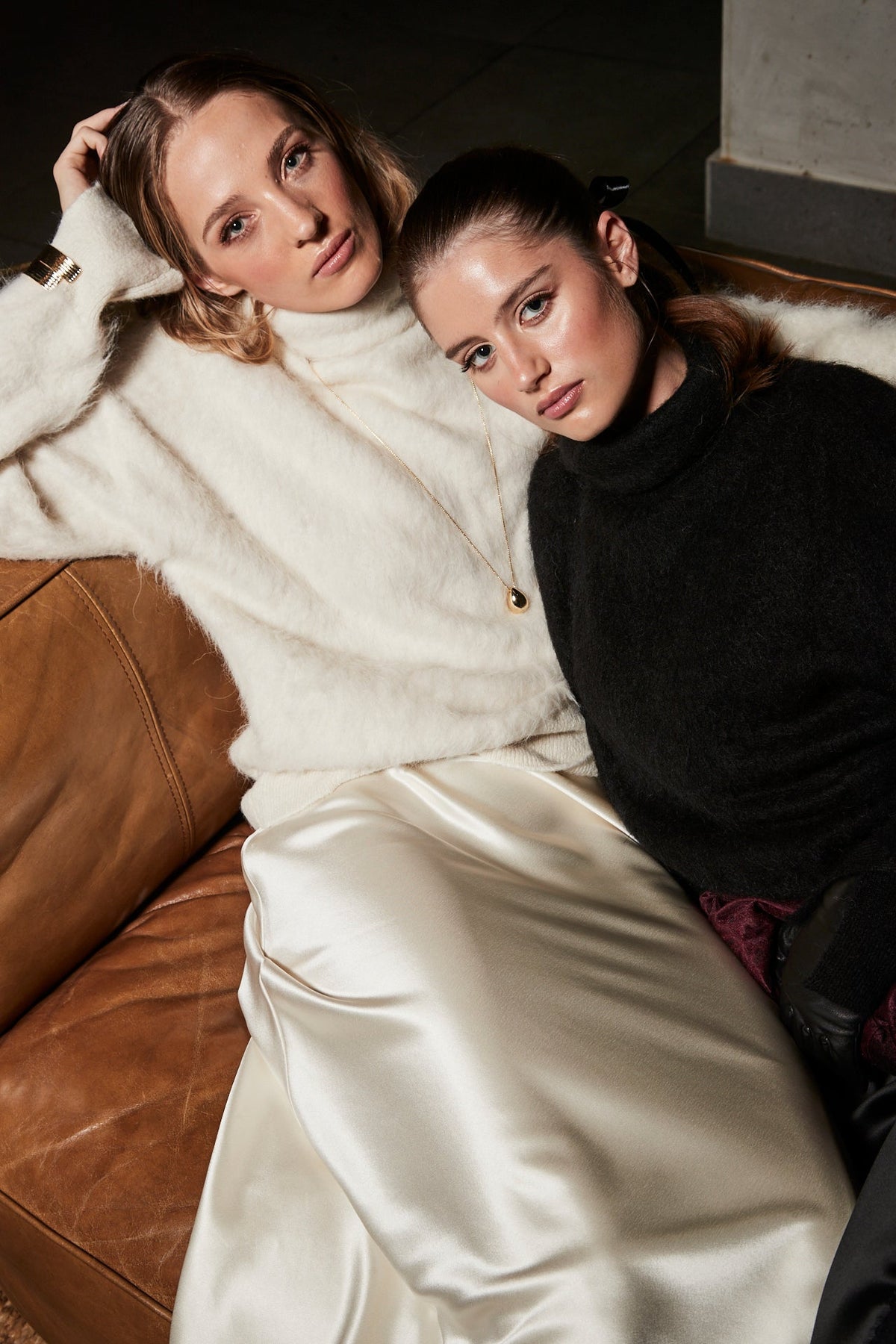
A beautiful knit is not something you replace each winter. Cared for with a gentle hand, alpaca becomes part of your story: the turtleneck you reach for on the first cold morning, the polo you pack for every trip. Our founder, Tarryn Candice, chose a brushed alpaca blend for the Lauren Turtleneck and the Stella Polo Knit for exactly that reason. Every E•L•S piece is designed in Australia and made in limited quantities, to be worn, loved and kept. For more on our brushed alpaca and the other materials we work with, visit our Materials & Care page.